Find out more about our academic programs

Find out more about our academic programs
In a spinning world Leaders are eager to learn

Find out more about our career services



MASTERS
Executive MBA
Challenge your thinking. Lead growth and renewal
DURATION
20 months
Application Deadline
Rolling admissions | Upcoming deadline: Please contact directly the EMBA office
START DATE
September 2026 | Intake every two years
FEES
€ 29,850
Overview
A weekend Executive MBA in Athens, Greece—built for experienced executives & entrepreneurs with a focus on leadership, strategy, innovation, and AI.
To experience real-time transformation at your work, you will learn from senior faculty of Alba and top business educators from premier business schools in Europe and the US (e.g., INSEAD, IMD, LBS, Wharton, NYU). You will learn in a block, weekend format -(one course at a time)- employing an efficient pedagogy through discussions of real problems, a decision-driven mindset, and personalized assignments applied to your work context. Learning together with participants from diverse functional and industry backgrounds, you will tap into different strengths and perspectives and enjoy a strong network of peers. To extend your global outlook, the curriculum concludes with an International Field Trip (past Field trips in London, Milan, Porto), blending inspiring lectures and company visits.
Our program opens doors to executive roles for those who aspire to transition to senior leadership. It also empowers executives to lead with confidence amidst rapid change in the marketplace and at work. Specifically, the program is designed for:
- Executives who lead their organizations, or are preparing to assume senior leadership.
- Functional leaders strengthening their general management perspective.
- Family business leaders planning the next stage of growth and renewal.
- Entrepreneurs scaling their ventures and building stronger organizational capabilities.
You may find here more information about the Program's Intended Learning Outcomes.
Student Profile
How EMBA Differs
Strategic and Digital & AI Transformation perspective: The Alba Executive MBA Program evolves around five Strategy themes: Big Picture Challenges, Business Fundamentals, Development of Personal and Organization Capabilities, and, finally, Renewing the Business. All 5 themes contain courses that engage with Digital Transformation and the role of analytical & Gen AI from a strategic point of view.
Leadership development & Innovation: the unique feature of our EMBA is a program-long combination of coaching, 360-degree assessments, and team activities, aimed to help you foster your own authentic leadership approach. At the same time, our EMBA features an unusually holistic innovation view that spans digital, marketing-driven, process-based, and business model innovation. Our curriculum also explores critical issues of management today, such as agility, resilience, innovation or improvisation through the lens of theater, jazz music, and other creative contexts.
Efficient and convenient learning for executives: Our modular format runs over 36 weekends, twice a month over 20 months (with long breaks). Our faculty employs a variety of teaching methods, including interactive, case-based discussions, cutting-edge academic knowledge, role playing, coaching, and in-class exercises. Actionable learning takes off with take-home individual or team personalized assignments (and not exams) to help you embed the new knowledge in your business.
Alba’s seal of quality: With our undisputed track record in executive education, you will experience Alba’s senior faculty’s stellar class performance and top-notch expertise. Having won the respect of academia abroad, we are also able to attract top business thinkers from leading schools such as Wharton, Harvard, LBS, INSEAD, IMD, SDA Bocconi, NYU, Darden, etc., with the aim of sparking your intellect and igniting your curiosity. More than 60% of the courses are taught by this elite faculty.
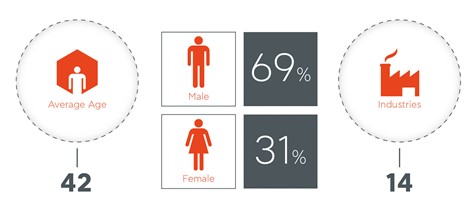
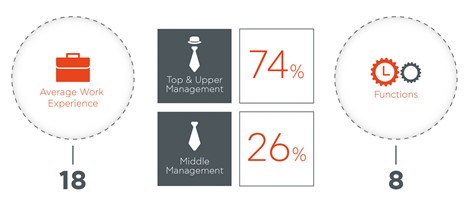
Peer learning and a strong network: Participants learn alongside a cohort of experienced executives from diverse industries (Shipping, FMCGs, Banking, Media, Consultancy, Technology, Energy, Minerals, Retailing, etc.), functional backgrounds (Marketing, Operations, Finance, Sales, Supply Chain, R&D, etc.), and different company forms (multinationals, startups, family businesses, etc.) creating a high-value peer learning environment and a network that continues well beyond graduation.
.jpg)
Alba Executive MBA | Talking about the experience Part II
Why EMBA
Tap our thought leadership.
The pursuit of world-class research defines Alba's institutional blueprint. The current faculty team has produced several books and book chapters, thousands of academic conference presentations, and hundreds of journal articles, which help us generate new ideas and tools for use in the classroom. But it is not just quantity, however. We take pride that more than 30% of our research output appears in the World Elite and Top journals according to the Association of Business Schools (ABS), a record no other academic institution in Greece and, in fact, very few in Europe can match.
Experience real-time value.
Revitalize your intellect on the weekend and return empowered in the office on Monday. With their executive education expertise in Greece and abroad, our senior faculty create a challenging learning environment in the classroom. In fact, at Alba we take pride that we do not focus on teaching but on learning: provoking debates, collaborating in teams, and generating solutions to real problems. Our resident and visiting faculty from top US and EU business schools will ignite your curiosity and demystify the latest management thinking and tools.
Enjoy flexibility and premium service.
You run a tight schedule and we run a rigorous program. To meet both ends, our program is delivered in weekends twice a month with long breaks around Christmas and summer holidays. Moreover, a dedicated staff member helps you navigate the program logistics, while mentoring is provided by our senior faculty. We also offer free textbooks and other study material. Finally, morning snacks and catered lunch are served on every class day.
To facilitate your busy schedule, if you are not able to join our in-person classes for health reasons or professional obligations, a hybrid mode of attendance is offered – where academically applicable - for up to 4 weekends of coursework. If you request more weekends of hybrid classes, approval must be obtained from the Academic Director upon submission of the necessary documentation.
Look back and exclaim: “Those were the best days of my life!”
… our alumni say for over 30 years, and as a matter of fact, they‘ve got to be right!
Since its founding, Alba strives to foster a stimulating academic environment sustained by teamwork, intellectual curiosity and close ties among faculty, students, staff and alumni relations. In this intimate environment, we create a tightly -knit community of engaged, enthusiastic and energetic students who seek to transform their lives and their organizations. It is exactly this Business Unusual spirit that has inspired more than 5,000 alumni who look back on their time at Alba with incessant affection and unwavering dedication.
The Alba EMBA
Curriculum
The Executive MBA Program Total Year Schedule 2026 - 2028
The Executive MBA Program is a broad, general management acceleration program. The curriculum has been designed to provide participants with the business acumen and the skills and competencies needed to enhance their leadership development. It includes a portfolio of courses and seminars that orchestrate a variety of teaching methods such as case studies, discussions, simulations, role playing, coaching, in-class activities, individual & team assignments, and lectures by world-class professors.
Classes meet on Saturdays and Sundays (maximum 2 weekends per month), while the Program’s courses are completed in a carefully planned sequence of 20 months.
The school reserves the right to reexamine the structure of all academic programs and proceed to any necessary changes in the total year schedules.
Module 1 | Big Picture Challenges
Courses
US Credits
Learn to assess the structure of the global business environment and how it affects industry structure, company strategy and performance. Learn what drives national competitiveness, productivity and growth.
Learn how to balance shareholders' expectations of financial performance and the nonfinancial demands of other stakeholders on ESG (environmental, social, and governance) Performance. Learn how top companies are developing innovative products, processes, and business models to meet both financial and nonfinancial objectives.
The dramatic changes in information technology and communication disrupt successful business models and lead to the evolution of new business models. Understand how social networks, Big Data, mobile technologies, cloud computing and services impact on businesses. Explore how the new technology trends impact the strategy and leadership of your business.
This course explores how ethical questions arise in managerial decisions, stakeholder relationships, and organizational life. Participants work with real cases from their own experience as well as with examples from practice and fictional constellations to analyze dilemmas using normative frameworks, stakeholder perspectives, and insights from behavioral ethics. We will investigate how Artificial Intelligence introduces entirely new classes of ethical concerns - but also can help to solve ethical issues and help to advance humanity. Emphasis is on reflective judgment, critical discussion, and clear argumentation rather than on prescribing a single right answer. The course introduces tools such as moral reasoning frameworks, stakeholder and impact analysis, AI ethics analysis, and organizational levers that executives can use to recognize, discuss, and actively manage ethical risks and responsibilities in their own contexts.
Module 2 | Mastering The Fundamentals
Courses
US Credits
This course concentrates on the economic foundations of management by developing tools to analyze key issues of the industry (Microeconomics) and general economic environment (Macroeconomics) of a company. The first part, Microeconomics, analyses consumer behavior, producer pricing and production decisions under different market structures. The second part, Macroeconomics, studies the operation of the entire economy, analyzing topics such as the determination of aggregate output, employment, inflation, interest rates, exchange rates and other macro variables.
Learn to develop powerful customer insights as a basis for creating, delivering and capturing customer value. Enhance your marketing decision-making skills in segmenting markets and creating winning marketing programs with an aim to build powerful brands and profitable customer relations.
You learn to crack down financial statement analysis: what information to report, how to aggregate it and how to use it for decision making. Learn also to critically assess financial statements with respect to assumptions and estimates firms use in reported figures.
Understand financial planning, the operation of financial and capital markets and long term investment planning. Particular emphasis is given in major financial decisions with important strategic implications, such as investment appraisal, valuation of corporate securities, managing the company’s resources, raising capital and coping with uncertainty. The course also examines the way companies manage mergers and acquisitions and other forms of corporate restructuring. The relationships between the interests of corporate managers, shareholders and lenders as well as issues of corporate governance are an important part of the course content.
Production and Operations management can be defined broadly as the process steps that fulfil the production and delivery of “goods”, where “goods” include both material products and intangible services that offer some utility to the end consumer and the overall process subsumes all stages required to transform a product from a rough idea in a brainstorming meeting to the end customer offering. This course focuses on managerial decisions in production and operations and their interrelationships with the other functional areas of the firm. Major areas of study include the design of productive systems, strategic planning, and operations planning and control. Specific topics cover the areas of process and job design, facility planning, capacity planning, distribution planning, inventory management and production planning and control.
Develop an understanding for how firms create value but also how they squander opportunities to create value and then how to revert strategy disarray in established organizations. Master frameworks for assessing the competitive context and the dynamics of firm resources and capabilities. Explore the current frontiers of strategy research on how value migrates from segment to segment as industries evolve and how to compete in a world of platforms and business ecosystems. Explore the latest thinking and research on how AI and GenAI transform the competitive dynamics of sectors and challenge organizations to rethink their value add. Explore the tools of corporate strategy and how companies need strategy to fix underperforming business units to create value for their corporate portfolio.
This course invites you to open the “black box” of organizations and examine how they function from a top management perspective. It explores fundamental questions: How do organizations operate, and why? How do they shape individual behavior, and how do individuals, in turn, influence organizational outcomes? What challenges do organizations commonly encounter, and how can they be designed and managed to remain adaptive and competitive in a rapidly evolving environment? The course places particular emphasis on navigating complex and dynamic contexts, where strategic and operational agility are essential for organizational survival and long-term success. It also examines individual and group behavior, focusing on the factors that motivate people to perform, collaborate effectively in teams, and make sound decisions in an increasingly globalized environment.
Module 3 | Developing Personal Capabilities
Courses
US Credits
Master the tools for crafting, practicing and delivering impactful communications. Expand your arsenal across a variety of communication challenges such as encouraging employees in tough times, addressing tough questions from media, presenting your strategy to investors.
Management consists of a set of universal skills that are well understood and trainable. Leadership consists of how each one of us makes a unique difference to the challenges we face with people and projects. It is not about wasting our energy trying to make ourselves more effective by changing our characters. Instead, it is more effective to find new and better ways of ‘being ourselves’ through enhanced insight and skill. The purpose of this course is twofold: (a) to assess and improve your readiness to function well as a leader by making your time at Alba Graduate Business School a self-directed journey of learning and development; the specific objectives are to develop an awareness of the knowledge and skills that underlie leadership effectiveness; to obtain individual-level feedback utilizing some of the best existing assessment instruments; to share feedback on your own and others’ skills; and to craft a personal leadership development action plan; (b) to help you acquire actionable knowledge about leadership styles, leading with power, and influence processes by exposing you to both classical perspectives on and contemporary trends in leadership theory and practice through a series of stimulating readings, discussions, exercises, and case studies.
Explore Aristotle’s concept of Phronesis and its links with contemporary theories of human judgment and leadership. To lead other human beings, one needs a high degree of maturity, an intuitive grasp of the human condition and a developed sense of judgment, all of which are uniquely dealt with in Greek philosophy.
In the second part of this course, reassess your leadership skills and reflect on the career and leadership challenges that lie ahead. The course also focuses on career transitions, job crafting and work identity through the life-span.
Explore the art of effective negotiations: how to think strategically, what tactics to engage in, and what goals to aim at. You will practice negotiation skills, receive feedback on individual negotiation problems and improve your ability to analyze the motives of individuals and organizations in competitive and cooperative settings. In addition, you will explore organizations as political entities and how to use power and influence to promote organizational goals. You will learn to analyze power structures and develop methods for exercising influence to make things happen.
As managers realize that increasingly business issues are not manageable in a routine manner, so it grows the pursuit of novel means for interacting with complexity, ambiguity and serendipity. Arts can meet business in various ways beside their traditional relationship of entertainment or fundraising. Diving into the world of art holds many lessons for managers and provides ample opportunities to find relevant and creative insights into managing organizations. Through a unique blend of social research and art, this course creates an interactive and experiential learning atmosphere and ultimately helps participants deal with their own quest for creativity, communication, rotational leadership, impromptu planning and trust building.
Module 4 | Developing Organizational Capabilities
Courses
US Credits
Develop an understanding of what drives the effective management and utilization of human capital. Topics include employee motivation and reward strategies, performance assessment and feedback skills, along with talent management processes and challenges, competencies for driving forward the company vision and strategic objectives.
Explore the latest thinking on how AI & digital innovations transform customer behavior and disrupt organizations. Learn how to instill customer centricity through digital tools & AI in your organization. Learn to recognize digital challenges and benchmark your current digital marketing activities. Examine strategy, leadership, and the organization issues to build valuable customers and leverage customer relationships for sustained growth in the digital & GenAI era.
Effective flow of goods and information through a procurement, production or distribution network are essential to superior customer service and productivity, both crucial drivers of business profitability. In this course, explore strategic supply chain issues such as capacity expansion or consolidation, make or buy decisions, production, procurement and logistics planning and customer service.
The objective of this course is to teach students execute business strategy by means of the Balanced Scorecard (BSC), a strategic performance-management tool that aligns business activities, improves communication, and measures organization performance against strategic goals. This course will help demystify the relationship among operation, strategy, dashboard, initiatives, HR values and competencies, mission, vision, and other business buzzwords.
By definition, Innovation is the ultimate value creation activity and, as such, it is the force behind all successful products, services, processes, and business models. If so, then why so many firms fail to innovate and instead fall into the trap of active inertia and eventual decline? Why can’t they just innovate at will, even if competitors are already eating their lunch? Often confused with godsend ingenuity, innovation is actually a process, albeit not a straightforward one. In this course, explore what innovation is in a business context, how to make it happen, and how to build an organization that can foster it systematically.
The course examines the institutional and economic forces affecting the international financial markets and the firm:cross-border flows, inflation, interest rates, exchange rate regimes, the role of the central banks in exchange rate determination and the financial instruments available in international markets (forwards, options, futures and swaps).
Module 5 | Renewing The Business
Courses
US Credits
Study the strategies and tactics in managing effectively opportunities and threats that are posed through the globalization of markets and industries. You are exposed to the various tradeoffs, the methodology and process in developing an international business strategy.
Today's business environment demands executives with capabilities in leading continuous adaptation rather than discrete projects, harnessing distributed innovation networks rather than just top-down mandates, and building organizational learning systems that evolve in real-time. Expose yourself to complementary approaches to change - from discrete interventions to AI-driven distributed innovation - because modern organizations require this full spectrum of capabilities. Explore the meta-cognitive skills required to orchestrate human and artificial intelligence as collaborative partners in continuous transformation. Develop skills through realistic change management simulation and apply the theory to your own organization with interactive GenAI exercises including role-plays, planning, and diagnostics.
This project-based seminar kicks off with exploring the Blue Ocean methodology to generate several value innovations to ignite growth in your business. Then you work to select and transform the most promising value innovation in the form of feasibility analysis. Finally, you work to develop a full fledging business model and assess its profit structure. In this integrative course, you draw together the EMBA skills and knowledge into your own business and receive coaching on your progress from several faculty members.
In the second year of the program, you will have the opportunity to travel abroad for a week-long Field Trip to gain insights about global economic and business trends; "insider" knowledge about the internal functioning of business firms in other countries; as well as direct, immediate opportunities to observe cross-cultural differences in leading organizations. During the Field Trip week, you will visit premier business organizations and meet with senior managers, while faculty will lead debriefing sessions to help you integrate the new experience with the knowledge gained through the Executive MBA courses.
Faculty
Having won the respect of academia abroad as a Graduate Business School, Alba has been able to attract top business thinkers from leading schools, especially for its Executive MBA Program (EMBA), with a goal to spark the students’ intellect and ignite their curiosity.
Academic Director

Kyriakos Kyriakopoulos
Academic Director of Executive MBA, Academic Director of Alba - Eurobank MBA in Financial Services
Professor of Strategy and Marketing
Course Faculty

Kostas Axarloglou
Dean of Alba Association
Professor of International Business and Strategy

Christos Cabolis
Chief Economist and Head of Operations at the IMD World Competitiveness Center
Associate Professor of Economics and Finance ,IMD

Dionysis Dionysiou
Academic Director of the MSc in Strategic Human Resources Management
Associate Professor of Organization and Management




Michael Jacobides
Professor of Strategy and Entrepreneurship; Sir Donald Gordon Professor of Entrepreneurship and Innovation, London Business School


Pietro Micheli
Professor of Business performance and innovation at Warwick Business School

Urs Muller
Associate Professor of Practice, SDA Bocconi Affiliate | Program Director, ESMT Berlin

Nikos Mylonopoulos
Director of The SEV Center of Excellence in Creative Leadership
Professor of Digital Business


Jordan Siegel
Associate Professor of Strategy and Michael R. and Mary Kay Hallman Faculty Fellow, Ross School of Business, University of Michigan


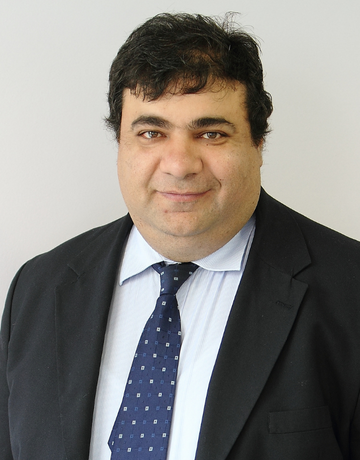
Stefanos Zarkos
Academic Director of The Alba MBA & MSc in Finance
Professor in the Practice of Finance
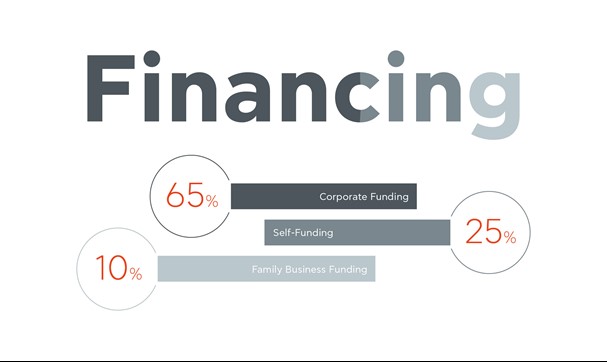
Tuition and Finance
Tuition Fees for September 2026:
€29,850 payable in installments throughout the duration of the program.
This includes books delivered to your home or office and comprehensive catering during the class days. This does not include your accommodation nor your flight expenses for the international field trip. You should estimate around 1000€ for this trip.
For companies: Grow your senior leadership talent
Many participants are sponsored in full or in part by their employers as part of leadership development and succession planning. Alba Corporate Members are entitled to special tuition discounts, and volume discounts may apply for organizations sponsoring more than one participant.
If your company acknowledges the rewards of these investments in developing future leaders, you can benefit from a full or partial sponsorship for your tuition. Alternatively, if your employer wishes to tie your investment in EMBA to certain achievements by sponsored employees, then you may be offered forgivable lending.
Please note that our EMBA is not designed for a typical manager who is up for promotion. Rather, it is a program for the elite 1-2% of your organization selected in your senior talent development or succession planning program. For example, if you are grooming someone for C-suite role (e.g., CMO, COO) or specialized leaders (e.g., Plant Manager) for a broader leadership role (e.g., leading a daughter company or leading the setup of a new company overseas), then EMBA can be just the right investment for nurturing future talent.
Alba Corporate Members are entitled to special discounts on tuition fees.
Volume discounts will also be offered to companies that will sponsor more than one employee.
For Financing Options, please visit here
For further information please contact us at 210 89.64.531 (ext. 2253) or at [email protected] or [email protected]
Admission Process and Assessment
Admission Process
We have a straightforward application process in three steps:
- Application online * (with scanned documents)
- A personal interview with the Academic Director.
- Evaluation by an Academic Committee.
Candidates must submit:
-
The completed application form, including one recent photograph in JPEG format;
-
Two letters of recommendation in Greek or in English.
-
Official academic transcripts as well as certified copies of degrees from each undergraduate, graduate, or professional degree earned;
-
Proof of competence in the English language (unless schooled in English), e.g., Proficiency, TOEFL, or IELTS.
-
Three essays, as indicated in the application form;
-
Receipt of the non-refundable application fee's [€60] deposit
Assessment Criteria
We recruit candidates who demonstrate drive for intellectual growth, leadership potential, team spirit, and communication and interpersonal skills. We seek candidates with at least 10 years of experience, of which 3 to 5 years are solid management experience (i.e., managing people and/or projects). More important than your tenure is your professional achievements and performance when assessing your application.
As the EMBA’s credo is “challenge your thinking, lead for growth and renewal”, we assess candidates with the following criteria:
Formal criteria: Degree and management experience
You should have a minimum of ten years of substantial work experience, three of which should be in solid management experience. That also means you should be currently employed or self-employed. You are also required to hold a bachelor’s degree. *
You are expected to provide 2 letters of recommendation. Finally, you should provide evidence of excellent command of the English language (e.g., Proficiency or TOEFL or IELTS or a bachelor's degree from a university where all courses were taught in English). In case none of the aforementioned exists, a personal interview with the Academic Director will determine the level of command of the English language.
*Exceptional cases, where no bachelor's degree exists, but are complemented by substantial senior management experience and professional achievements, will be seriously considered.
Past accomplishments
How do we assess your potential for leadership? We look for clear evidence of achievement and progression. You should demonstrate a record of successful leadership, which includes the pursuit of a goal, motivating people to achieve this goal, and articulating a common purpose. We also assess the communication and interpersonal skills, which are crucial to successful leadership.
Academic curiosity
While success is important, how you have succeeded is no less important. Our EMBA students should have developed themselves, but also helped others develop. Successful applicants are reflective, thoughtful leaders who are intrigued by new knowledge as a means to make a difference in their organization.
Our EMBA accepts applications all year round, and candidates are encouraged to apply as soon as possible. Though our admission process is straightforward and expedited, it still takes time to plan and prepare the application. Therefore, you are advised to start the process early to allow time for preparation.
To learn more about our academic policy, course credit policy, fees policy and rules for student conduct, please read the Student Handbook.
Request a brochure

Antonina Kalkavoura
EMBA Program Executive Director
Antonina Kalkavoura is the Executive Director of the Corporate Affairs Department and the Executive Director of the Executive MBA. She holds a BSc degree from the National & Kapodistrian University of Athens, School of Philosophy, Department of Philology, an MBA degree from ALBA Graduate Business School, and an MSc degree in Banking & Finance from Hellenic Open University. She has extensive experience in managing academic programs within the School, with her previous position being the Director of Academic Programs.

Andromachi Doumoura
Senior Program Manager Executive MBA
Let’s meet up!
We encourage you to have a direct contact with us and give us the chance to explore together if the Executive MBA can help you advance your career and if Alba EMBA is the right fit for you.
You may do so by filling the relevant form and arrange an informal face to face or virtual chat with a member of our Admissions Team to receive personalized information. If this kind of contact doesn’t suit you, we also offer you other options to receive information. Alba invests in your success even before you become our student, helping you learn how EMBA can foster your personal development and career progression.