Find out more about our academic programs

Find out more about our academic programs
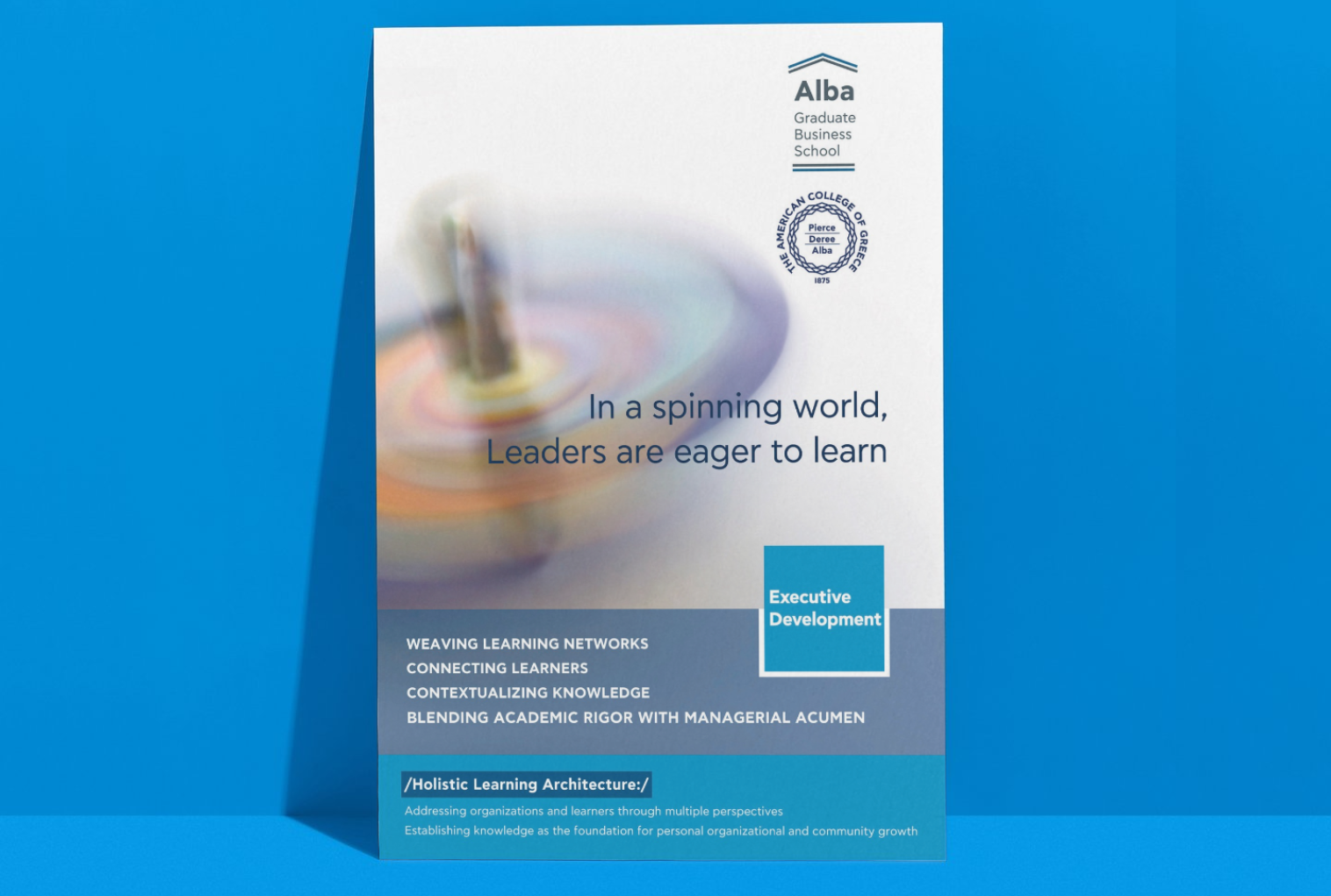
In a spinning world Leaders are eager to learn

Find out more about our career services


A lecture by Professor James Bacchus
Co-organized by the Theodore Papalexopoulos Sustainability Dialogues, the Institute for Hellenic Growth and Prosperity, and The Demos Center
Autocracies now outnumber democracies for the first time in a generation. At the same time, the world is falling behind on every major sustainable development goal—from climate change and biodiversity loss to pandemic preparedness. What if these are not separate crises, but one and the same problem? And what if part of the answer has been waiting, for 2,500 years, on a hillside in Athens?
On Monday, April 20, 2026, The American College of Greece welcomes Professor James Bacchus to the ACG Events Hall for a timely and thought-provoking lecture that brings global urgency into direct dialogue with the origins of democracy itself.
You are invited to be part of this important conversation.
Drawing on his latest book, Democracy for a Sustainable World: The Path from the Pnyx (Cambridge University Press, 2025; Financial Times Best Book on Global Political and Economic Thought), Bacchus revisits the foundations of democratic governance to reimagine its future. Beginning from the Pnyx—the Athenian hillside where citizens once gathered to govern themselves—he connects ancient democratic practice with some of the most pressing challenges facing the world today.
At the heart of the lecture is a powerful and compelling argument: the global retreat of democracy and the failure to meet sustainability goals are deeply interconnected—and neither can be solved without the other. Addressing them requires more than incremental reform. It calls for a renewed vision of participation, accountability, and collective decision-making.
Central to this vision is a bold and unexpected idea: the revival of sortition—the selection of citizens by lot—as a complement to representative democracy. Rooted in ancient Athenian practice yet strikingly relevant today, this approach offers a practical and innovative framework for strengthening democratic institutions and restoring public trust.
This is far more than a conventional academic lecture. It is a rare opportunity to engage with a leading global thinker whose ideas are grounded not only in scholarship, but in experience at the highest levels of governance. As a former U.S. Congressman and a founding member and twice Chairman of the Appellate Body of the World Trade Organization, Bacchus has helped shape the global systems he now challenges us to rethink.
The setting makes this moment even more distinctive. Just a few kilometers from the Pnyx, this conversation unfolds in the very city where democracy was first imagined and practiced. Athens is not simply the location of this event—it is central to its meaning.
Attendance is open to the public; advance registration is required.
Reserve your place here.
Program
The evening will begin at 7:00 PM with welcome remarks by Ed Wingenbach, PhD, President of The American College of Greece. The lecture and book presentation by Professor Bacchus will be followed by a panel discussion featuring Ed Wingenbach, Professor Bacchus, and Associate Professor Effie Fokas, moderated by Professor Pavlos Vlachos and Professor Michalis Psalidopoulos. The event will conclude with an open Q&A session and a reception.
About the Speaker

Professor James Bacchus is Distinguished University Professor of Global Affairs and Director of the Center for Global Economic and Environmental Opportunity at the University of Central Florida. He is also a former U.S. Congressman and former Chairman of the Appellate Body of the World Trade Organization (WTO).
He is among the very few individuals who have both written extensively about global governance and played a central role in shaping it. As a founding member—and twice Chairman—of the WTO Appellate Body, the highest tribunal in world trade, he adjudicated more international trade disputes than any other individual in history. Earlier, as a member of the U.S. Congress (1991–1995), he helped draft the legislation that brought the United States into the WTO.
His previous books, The Willing World (2018) and Trade Links (2022), were both recognized as Financial Times Best Books of the Year. His latest work, Democracy for a Sustainable World: the Path from the Pnyx (2025), continues this trajectory, offering a bold and timely rethinking of democratic governance for a rapidly changing world.
